News

echoparkfilmcenter
Interactive data tools such as ProPublica's recently released Miseducation and our own Arts Ed Profile online tool can be important in uncovering inequities based on demographics within a district or school.
While the Los Angeles region’s creative economy accounts for nearly 800,000 jobs and $60 billion in wages earned[1], many communities continue to face barriers to entering the creative workforce. Developing work-based learning opportunities and career pathways for young people (with an emphasis on students of color, low-income students, LGBTQ students, students with disabilities, current/former foster youth, and youth on probation) is a key funded recommendation of LA County’s Cultural Equity and Inclusion Initiative (CEII).
artsedberlin
"We are living in an era of great disruption and enormous potential." —opening comments, Presencing Foundations Program, Berlin, Germany
In August, the Los Angeles County Arts Education Collective (formerly Arts For All) announced $748,400 in one-year matching grants to 42 school districts, including three charter networks through its Advancement Grant Program.
declaration
The Los Angeles County Board of Supervisors has long advocated for the importance of the arts in public education. In 2002, the Supervisors unanimously adopted the Los Angeles County Regional Blueprint for Arts Education which established the LA County Arts Ed Collective as a part of the Los Angeles County Arts Commission. The Arts Ed Collective was directed to work with the Office of Education to ensure that LA County’s 1.5 million public school students receive high-quality arts education.
Three Poems Listing Image
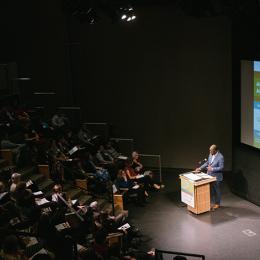
The following three poems were written onsite during the Arts Now: LA County Arts Education Summit. They were written for and in response to the events, ideas and topics of the summit. diversity By Cyrus Roberts
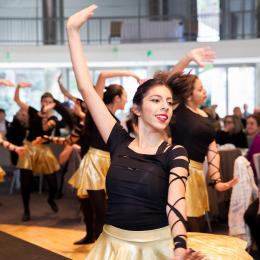
artseddancer
Resources and Presentation materials from the Arts Now: LA County Arts Education Summit
The Los Angeles County Arts Commission releases findings from a 18-month survey of arts education in K-12 public schools.
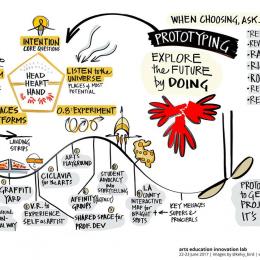
By Carla Javier/KPCC California law requires schools to offer arts instruction from first to 12th grade. But, in practice, not all students are getting equitable access to arts education. So the Los Angeles County Arts Education Collective is trying a new approach: forming an Arts Ed Innovation Lab, and working with stakeholders to create prototypes – small but scalable projects that creatively increase access to arts education for more, and ideally all, students.
Campus Kilpatrick tests efficacy of new "LA Model"